LinkedIn Profile Optimisation for Indians in the USA: The 2026 Guide
2026 is not a normal year for Indian professionals in the United States
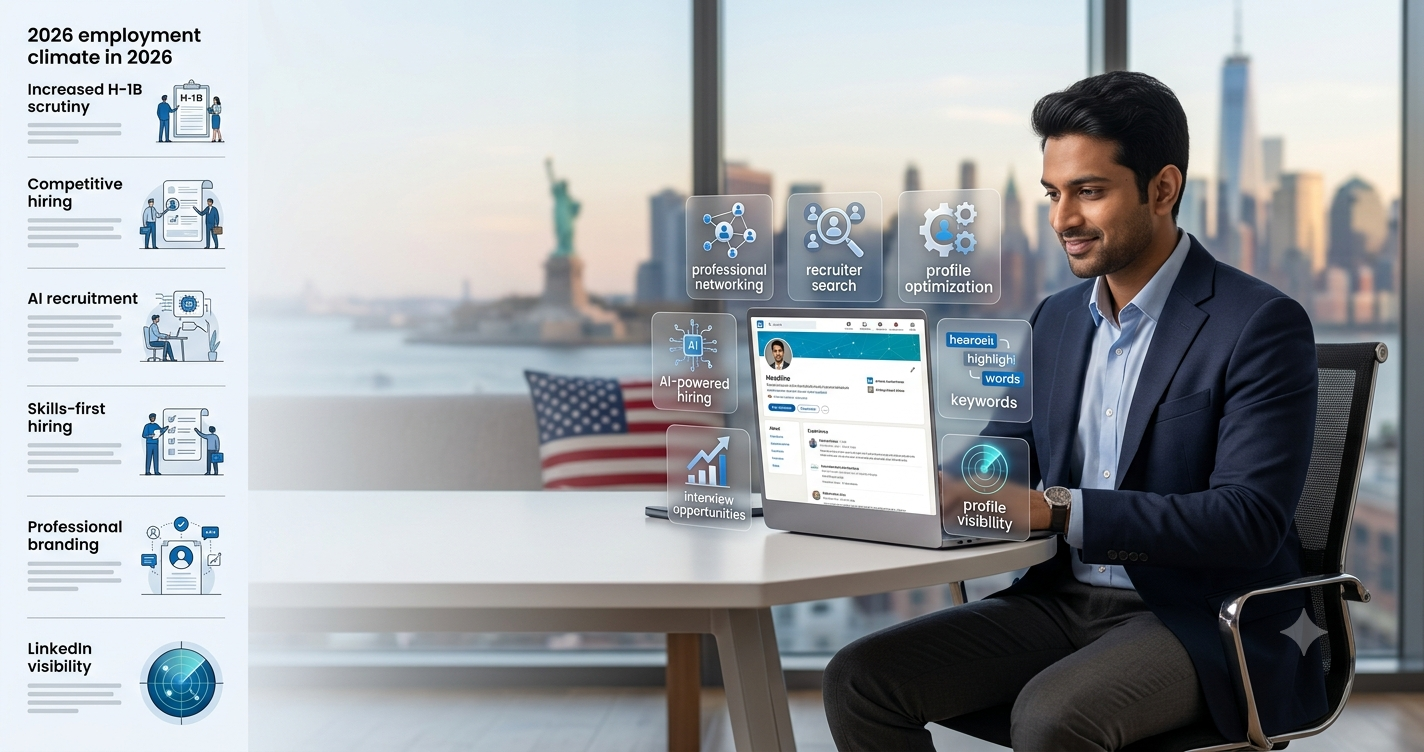
H1B visa fees have increased sharply. Scrutiny on applications has gone up. The number of Indian tech workers returning home is rising faster than the number arriving. And the US job market is shifting at a pace most professionals have not had time to keep up with.
In this environment, your LinkedIn profile is not just a career tool. It is a protective asset. It is what keeps your name in the right conversations before you are forced into a rushed job search under pressure.
This guide covers what is actually happening in the US job market right now, and exactly what your LinkedIn profile needs to do in response.
Sources: LinkedIn Economic Graph 2026, LinkedIn Jobs on the Rise 2026, The Federal 2026
What Indian professionals in the USA are actually facing right now
Over 5.4 million people of Indian origin live in the United States. Indian Americans are among the most highly educated immigrant groups in the country, concentrated in technology, healthcare, finance, and academia across Silicon Valley, New York, Chicago, and Houston.
But the environment in 2026 is more uncertain than it has been in years.
H1B has undergone major changes, with fees increased from around $5,000 per petition to $100,000, along with a sharp rise in rejections and tighter scrutiny of applicants. In 2026 alone, 7,300 Indian tech workers have already returned to India, despite the year being only halfway through.
For Indian professionals already in the US, this creates two urgent needs. The need to stay visible to the right employers before a visa situation forces a panicked job search. And the need to stand out clearly in a market where thousands of equally qualified Indian professionals are competing for the same roles.
LinkedIn is where both of those needs get addressed. But only if your profile is built for this market, not the one that existed three years ago.
What a real profile problem looks like at the senior level
A Principal Software Engineer at a major US tech company reached out for a LinkedIn profile audit recently. He had the experience, the credentials, and the network. On paper, everything looked strong.
But his profile had five problems that were quietly working against him.
- His headline was just his job title. No keywords. No positioning. A recruiter searching for a senior engineer with his exact skills would not find him in the results.
- His About section was vague. No outcomes, no story, no signal about where he wanted to go next. It described a role, not a person.
- His experience bullets listed responsibilities, not results. What he was asked to do, not what he actually delivered.
- His Featured section was completely empty. That is prime portfolio space sitting blank.
- His profile was dormant. No activity for months. LinkedIn’s algorithm had quietly stopped surfacing him in searches.
The recommendations went out on a weekday evening. He read through them the next morning and his response at 7:43am was unprompted: he called it “amazing stuff.” He said just reading through what a recruiter-optimized profile looks like, the headline structure, the positioning, the way experience is framed, was enough for him to see the gap clearly.
It is not that your profile is bad. It is that it was never built with a recruiter’s eye. Recruiters do not read profiles the way you wrote them. They scan for specific signals in specific places. And if those signals are not there, they move on.
This is not an unusual situation. It is one of the most common patterns at the senior level in the US market. Strong experience, weak profile.
Accurate is not enough anymore
The United States has the most mature LinkedIn market in the world. American professionals have been building personal brands, writing thought leadership content, and optimizing profiles for over a decade.
For Indian professionals competing in this market, the challenge is not just being found. It is standing out in a search result full of polished, keyword-optimized profiles.
Most Indian professionals default to a headline like this:
“Software Engineer at Google | 8 Years Experience | Java, Python, AWS”
That headline is accurate. It is not positioned. In a market where thousands of engineers have similar titles and similar tech stacks, accurate is not enough.
A stronger headline for the same professional looks like this:
“Senior Software Engineer | Building Scalable AI Infrastructure | Java, Python, AWS | Open to Senior and Staff Level Roles”
The difference is direction. The second headline tells a US recruiter not just what you do, but what kind of work you do best and what you are looking for next. That specificity is what makes you relevant to the right search and not just any search.
The About section mistake most Indian professionals make
The most common mistake Indian professionals make in the US market is writing an About section that reads like a formal resume summary.
“I am a results-driven professional with 10 years of experience in software engineering, specialising in cloud architecture and distributed systems.”
That sentence could describe a hundred thousand people on LinkedIn. It tells a US recruiter nothing that makes them want to keep reading.
The US market rewards voice. Specificity. A sense of the person behind the profile.
Your About section needs to open with your strongest result or your clearest professional identity in the first two lines, before LinkedIn collapses the text behind the See More button. It needs to tell the story of what you have built, what problems you solve, and what you are looking for next, in language that sounds like a real person talking.
If you are navigating H1B uncertainty, you do not need to hide it. Being clear about your visa status and timeline in your About section reduces friction for US employers. Ambiguity creates hesitation. Clarity removes it.
How to find the keywords US recruiters are actually searching for
LinkedIn’s 2026 Top Companies list shows that skills-first hiring continues to gain traction across top US employers, reflecting a broader move toward capability over credentials.
In the United States, the fastest growing roles in 2026 sit in AI Engineering and Implementation, with skills such as data annotation, model training and fine-tuning, OpenAI API integration, retrieval-augmented generation, and vector databases accelerating as organisations embed AI into production environments.
For Indian professionals in technology, this means your skills section needs to reflect current market demand, not the skills that got you your current role two or three years ago.
The research method is straightforward. Go to LinkedIn Jobs. Search for the roles you are targeting, filtered to your target city or state in the US. Open the top 10 job descriptions. Note the exact skills, tools, and terminology that appear repeatedly.
Those are the words that need to appear naturally across your headline, About section, and experience bullets. Do not guess. Let the job descriptions tell you what the market is searching for right now.
Stop describing your job. Start proving your impact.
In the US market, experience bullets are read differently from how most Indian professionals write them.
The typical approach is to describe scope and responsibility.
“Managed a team of 12 engineers across three time zones to deliver cloud migration projects for enterprise clients.”
The US market expectation is outcome and impact.
“Led a team of 12 engineers to migrate 40 enterprise clients to AWS, reducing infrastructure costs by an average of 32 percent and cutting deployment time from six weeks to four days.”
The difference is evidence. US employers make hiring decisions based on what you have actually delivered. Every experience bullet should start with a strong verb and end with a result. Numbers wherever possible. Specific outcomes always.
Your visa status is not something to hide
If you are on an H1B visa or dependent on employer sponsorship, your LinkedIn profile carries an extra weight that most professionals do not have to think about.
Employers in the US are more cautious about sponsorship in 2026 than they have been in years. That caution means your profile needs to reduce hesitation before a recruiter even reaches out.
Being clear in your About section about your current visa status, your timeline, and your transfer eligibility removes the ambiguity that causes recruiters to move on to the next profile.
If you are a green card holder or US citizen, make that visible. If you are on H1B with transfer eligibility, say so plainly. If your status is complicated, one clear sentence is better than silence that leaves a recruiter to assume the worst.
The professionals who navigate this environment well are not the ones who hide the complexity. They are the ones who address it directly and make it as easy as possible for the right employer to say yes.
Showing up consistently is what keeps you visible
Only 3 percent of LinkedIn’s 1.2 billion members post content regularly. That means the space is wide open for consistent creators to build visibility, authority, and audience.
In the US market specifically, personal profiles generate significantly more reach than company pages. Your voice, your perspective, and your genuine professional insights travel further than any brand content ever will.
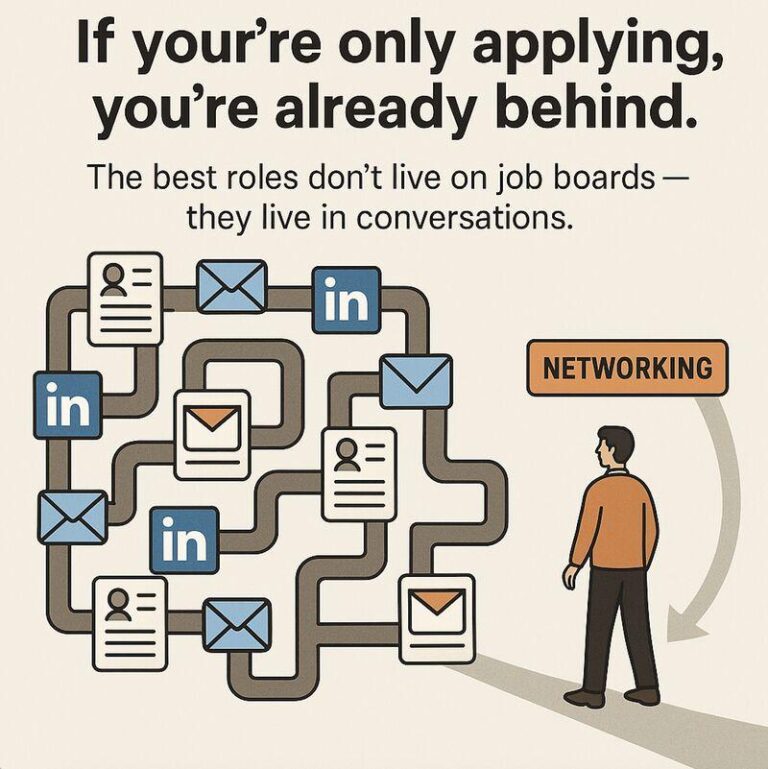
Three actions a week is enough to stay visible. One post sharing a real insight from your work. One comment that adds genuine value to someone else’s conversation. One connection request to someone in your target company or sector.
That level of presence, kept up over six to eight weeks, builds the kind of visibility that means your name surfaces in the right conversations before you ever need to send a single application.
For Indian professionals in the US right now, that early positioning is the difference between a proactive career move and a panicked job search under time pressure.
What this looks like when it actually works
Going back to the Principal Software Engineer. After receiving the full rewrite, he updated his profile the same evening. The headline changed. The About section changed. The experience bullets changed. The Featured section was filled in with his strongest project.
He went from a dormant profile with zero activity signals to a fully positioned, keyword-aligned profile that was active the same week it was updated.
The rewrite itself took under an hour to implement because everything was delivered copy-paste ready. That is the point of a proper audit and rewrite. Not just telling you what is wrong. Giving you the exact words to replace it with.
If you want to see what that process looks like and what it costs, take a look at our LinkedIn profile optimization packages. The audit starts at a fixed price and the full rewrite includes a 30-minute implementation call where we update everything together. Done in one session.
If you are an Indian professional in the US and you are not sure whether your LinkedIn profile is doing its job, send us a message or DM directly on LinkedIn. We will give you an honest read on where it stands.
Connect with Chithra Elangovan on LinkedIn
Follow for weekly LinkedIn tips, recruiter insights, and real profile examples from the field.